Form Enhanced
A patch library and container app that took Form, the node-based prototyping tool for iOS, out to hardware, music, games engines and the client's hands.
Overview
Form was built to test gestures and interactions on a real phone. Form Enhanced kept that simple, node-based system and added the things client work kept asking for: patches for the hardware and software around the phone, and a way to send the prototype to someone who doesn't own Form.
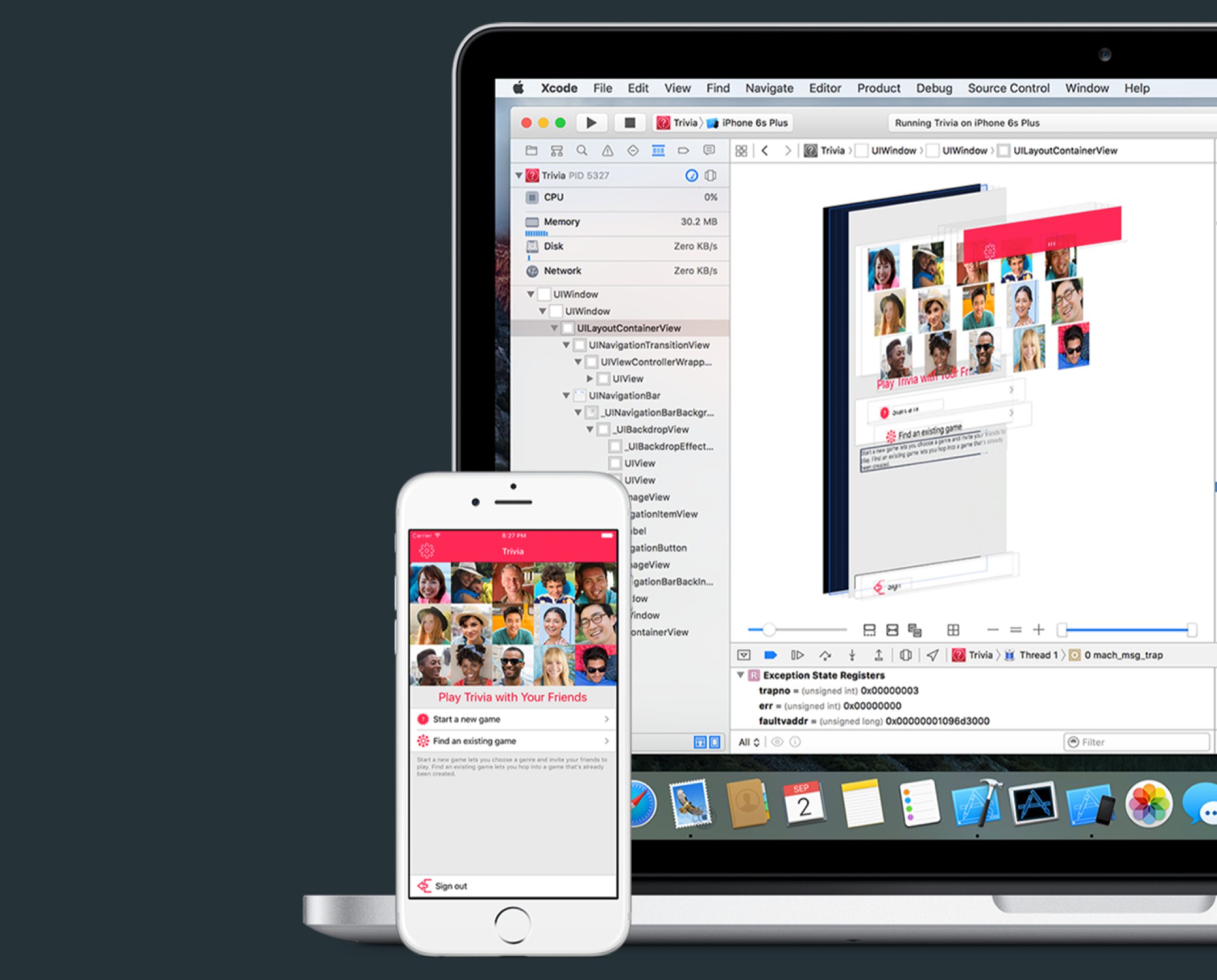
Build a prototype, ship it through TestFlight or wrap it in a container app. The client taps through the proposed UI on their own device, then records the screen with their commentary and sends the feedback straight back.
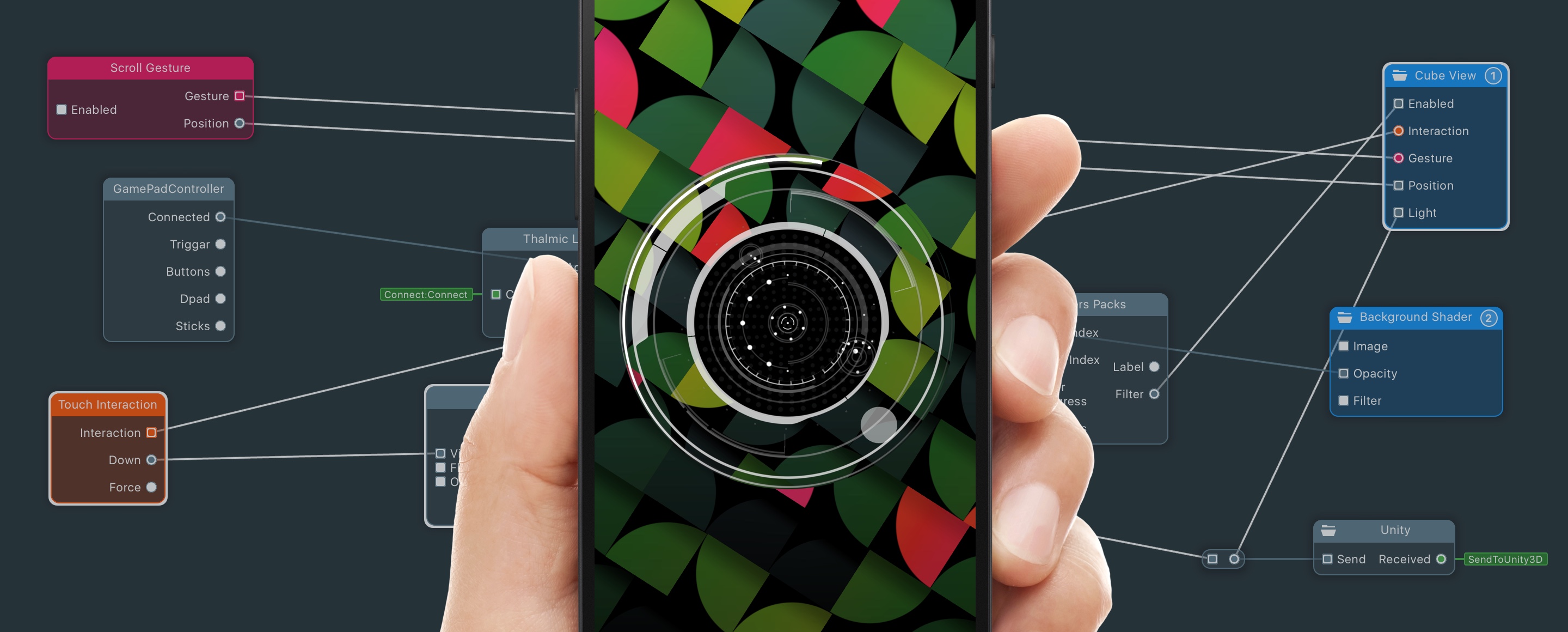
Wire the prototype in Form. The enhanced patches sit in the library beside the originals, each with a documented card.
Ship it via TestFlight, or build a branded container app so the client opens a real app, not a viewer.
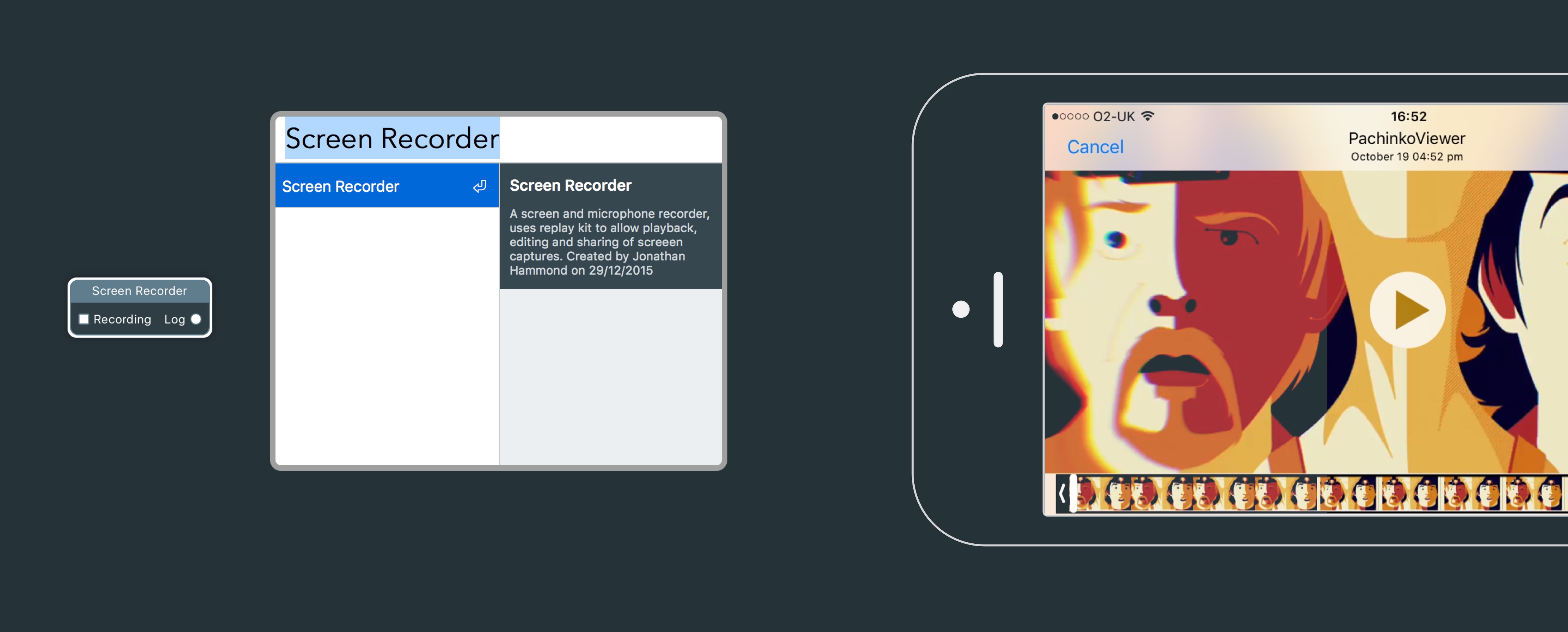
The Screen Recorder patch captures screen and microphone, so a client's walkthrough and commentary come back as one clip.
The patch library
Every enhanced patch followed Form's own rules: one job, typed ports, and a card in the library explaining what it does. This is what it reached.
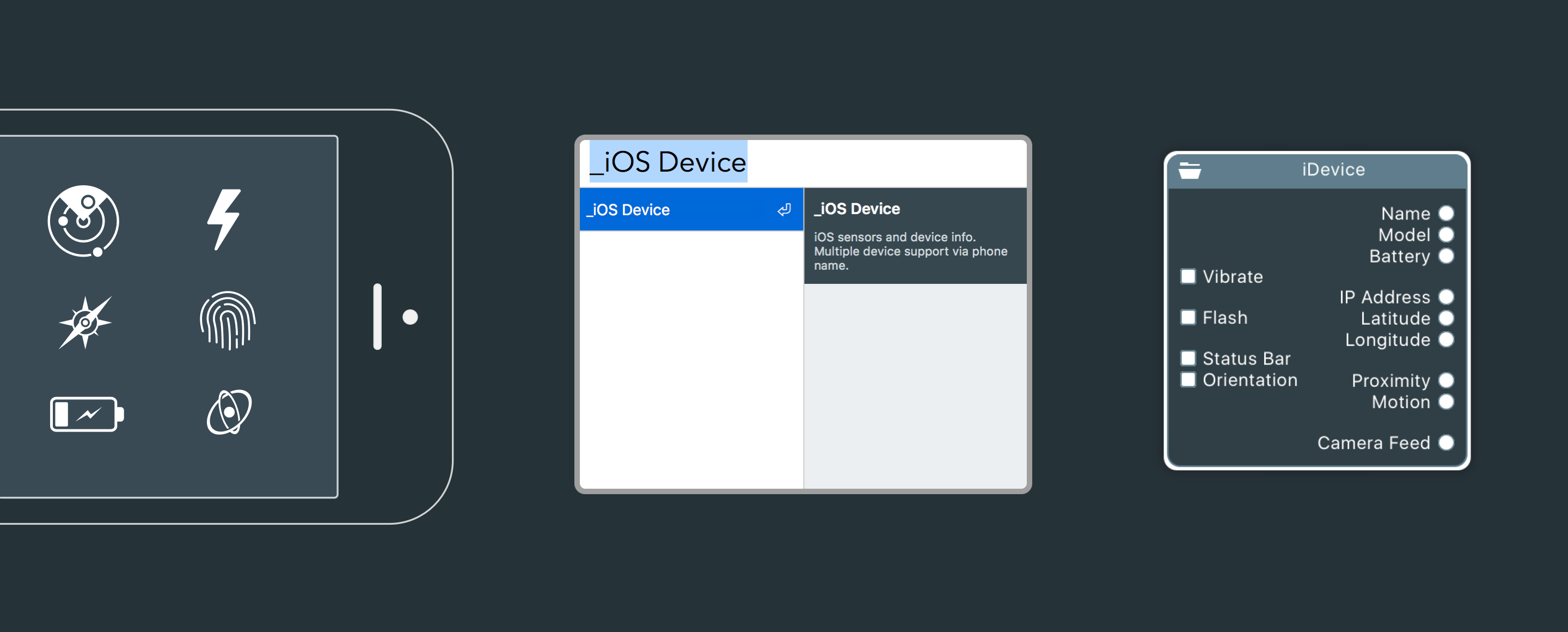
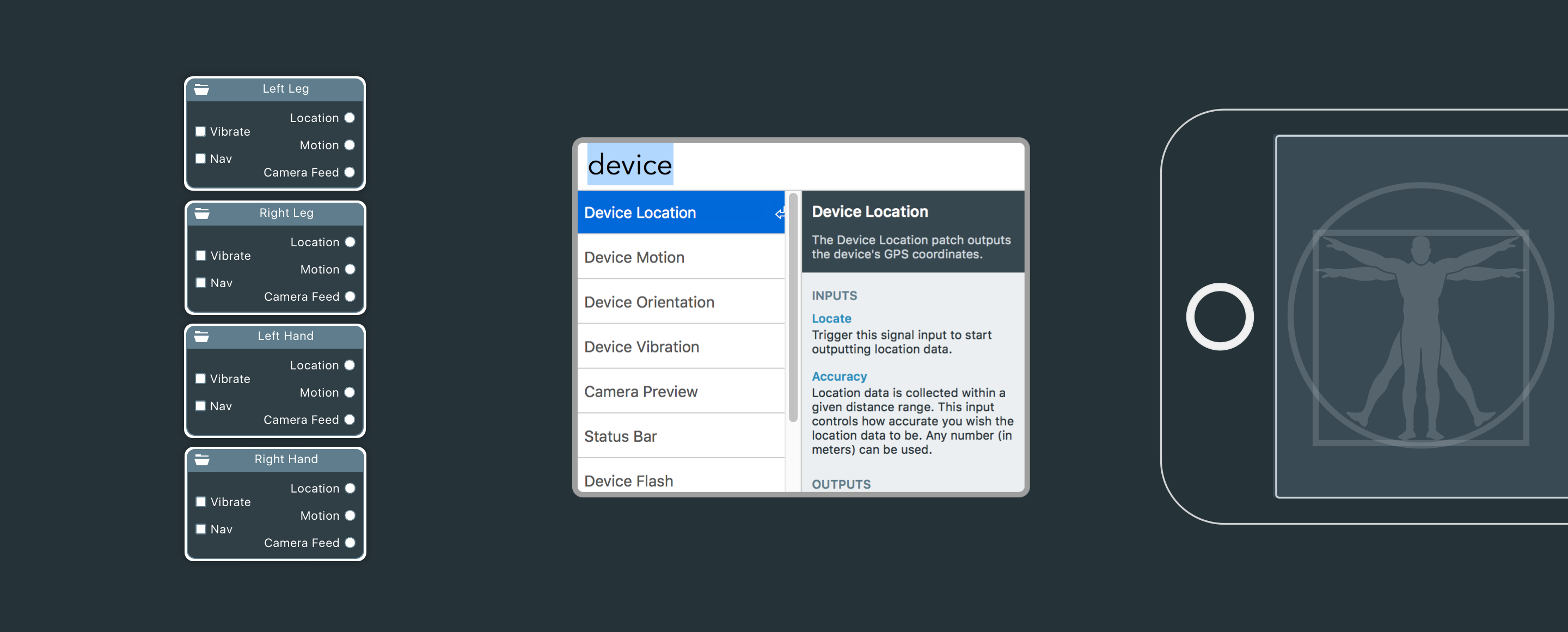
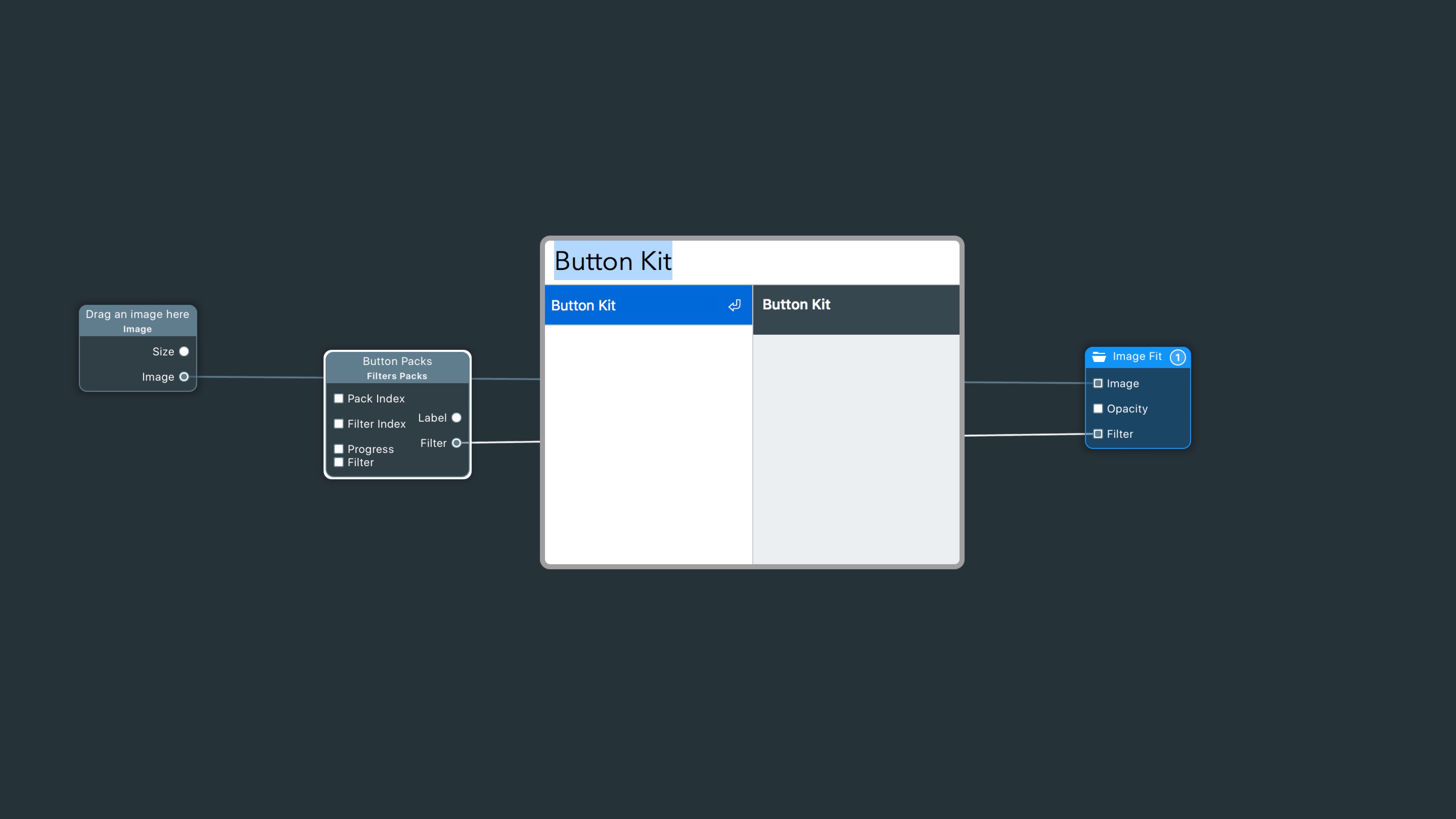
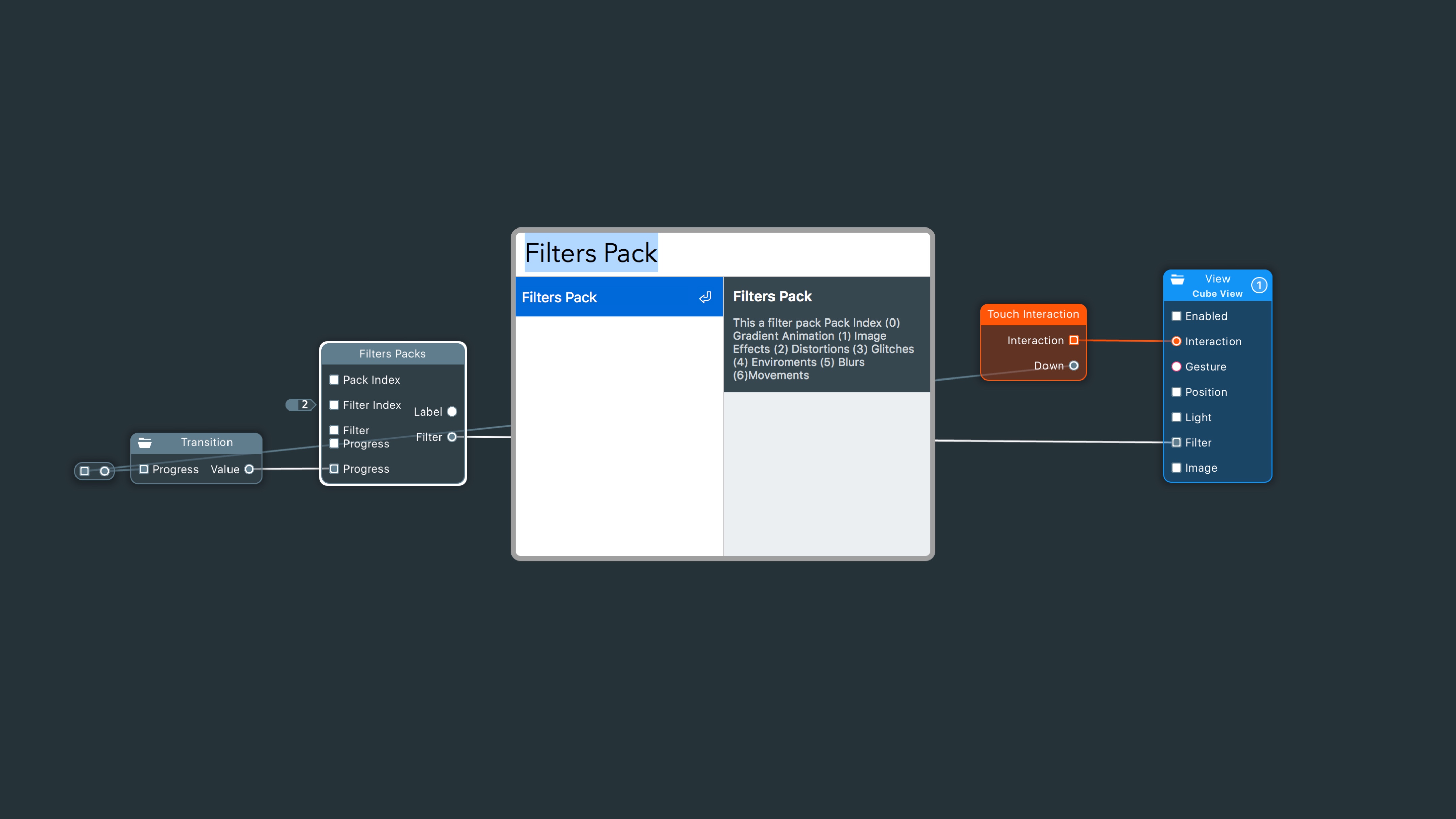
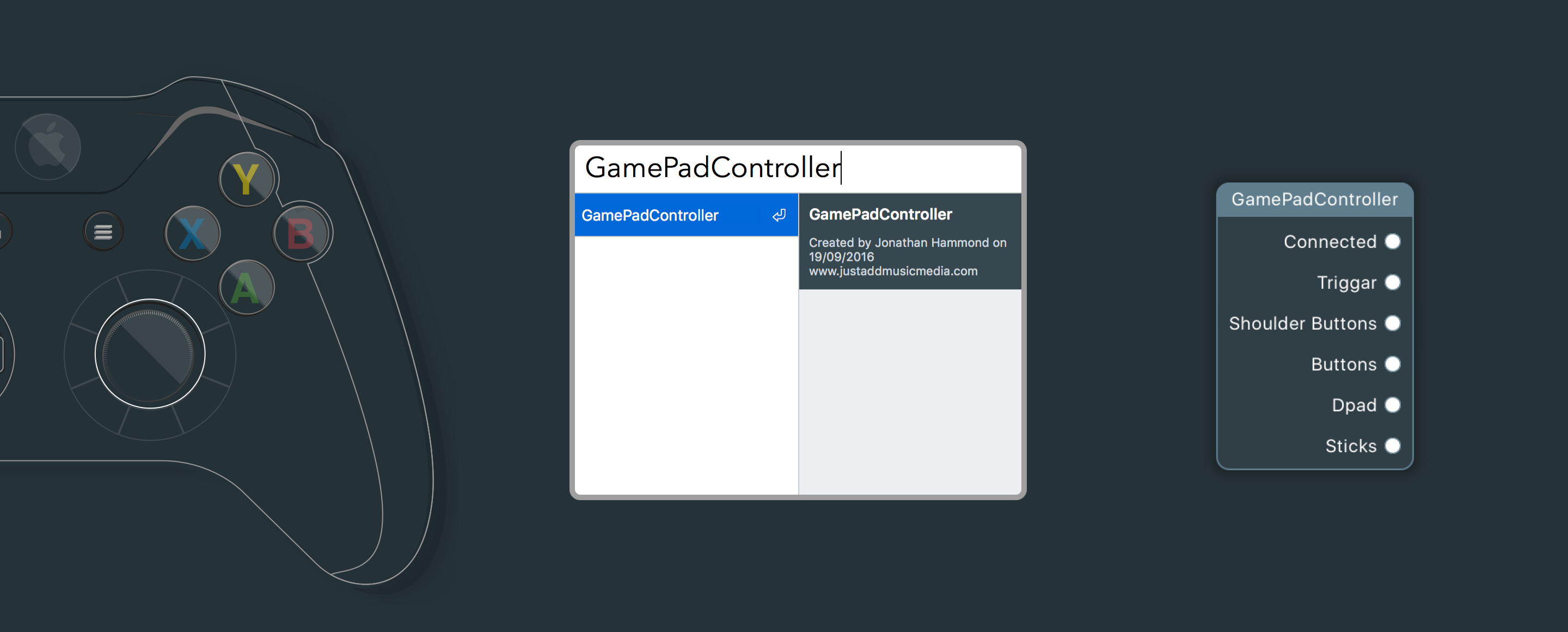
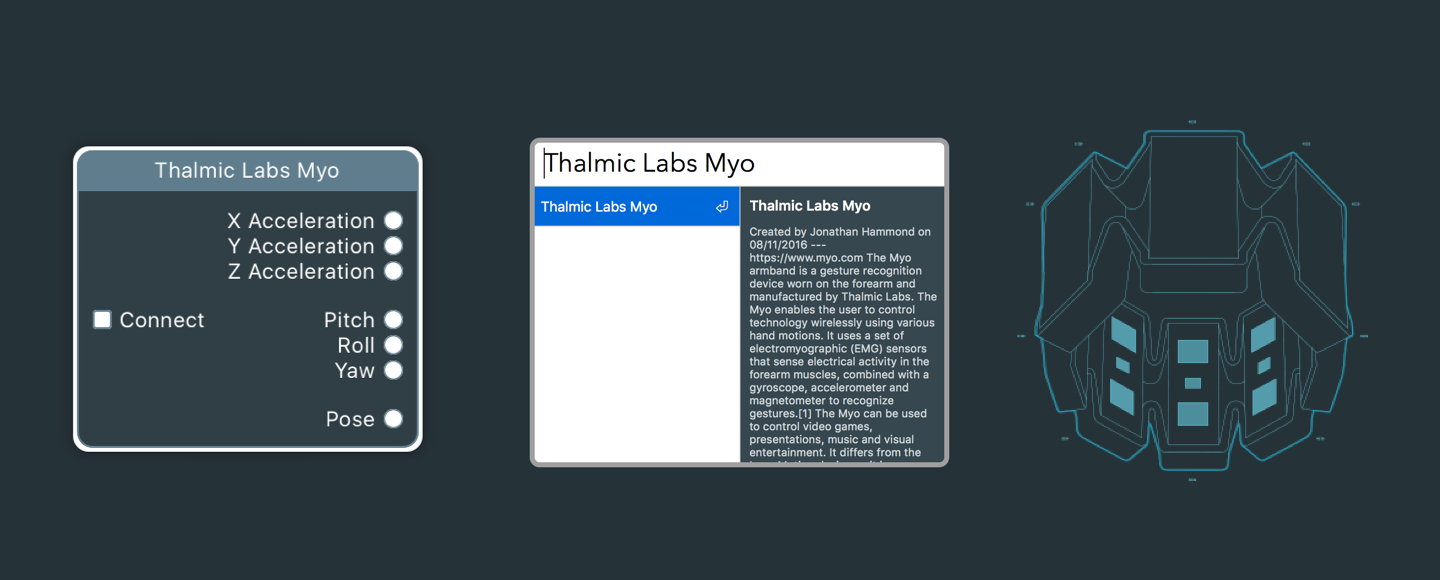
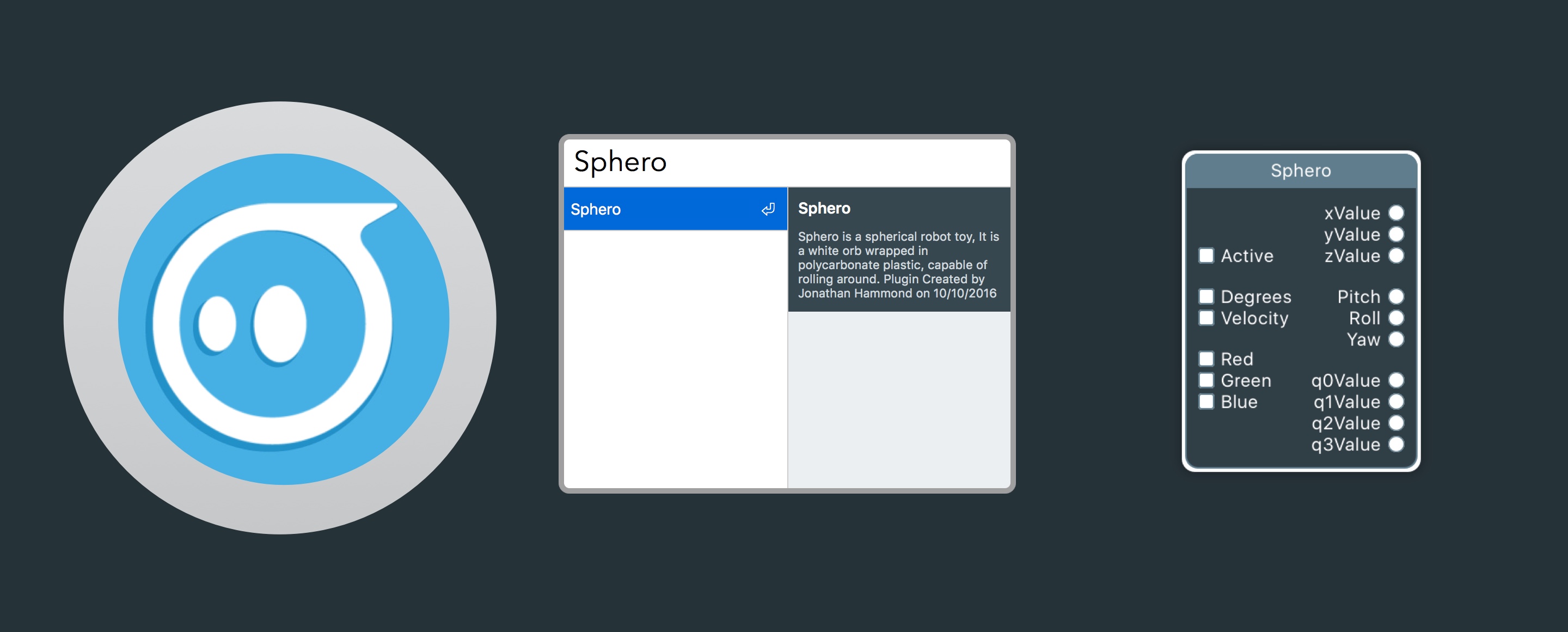
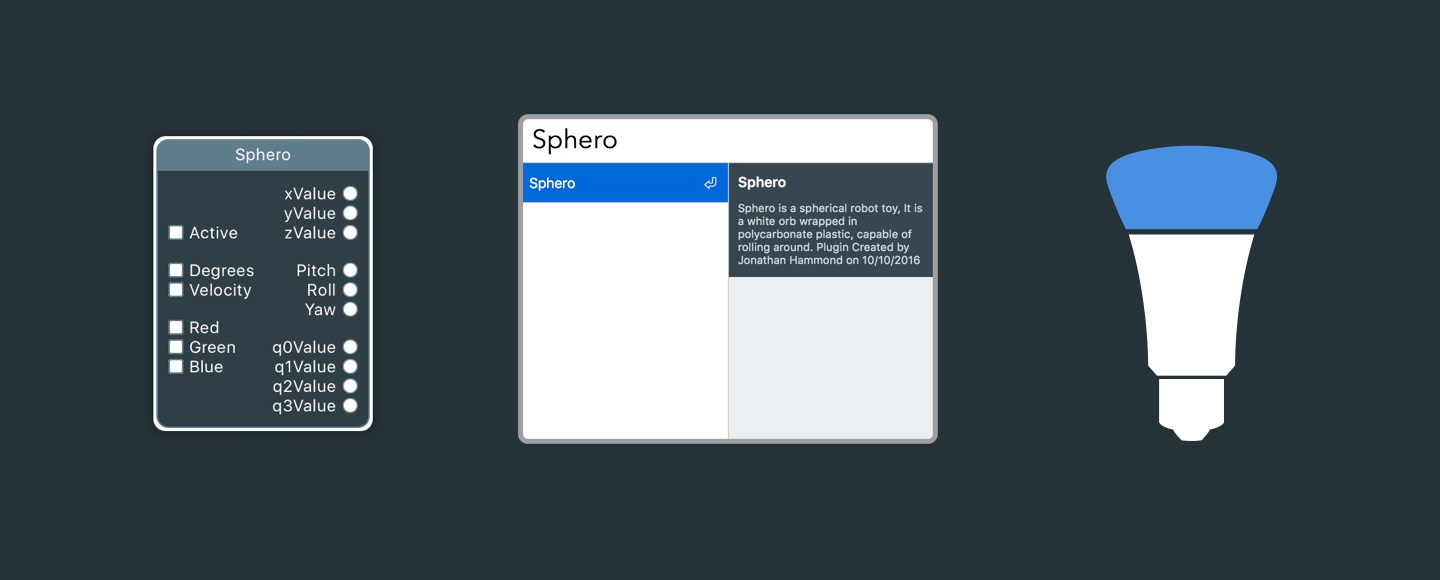
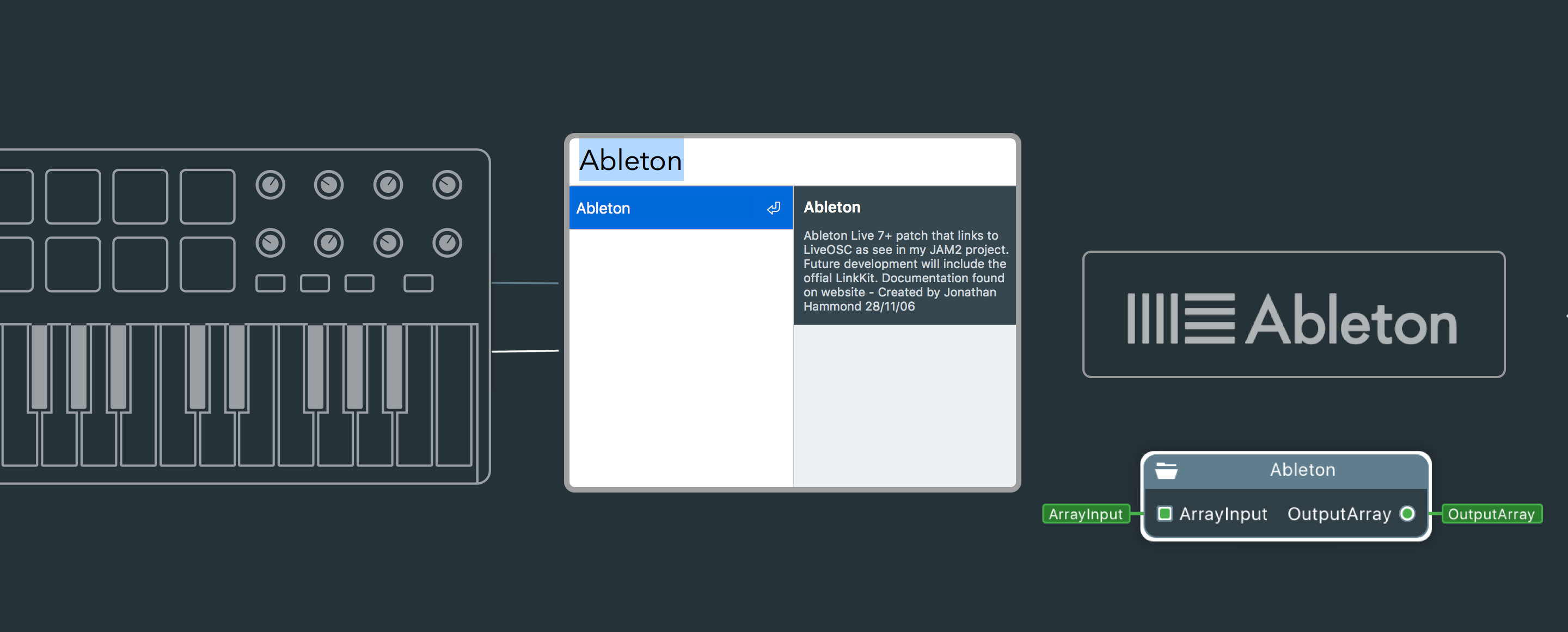
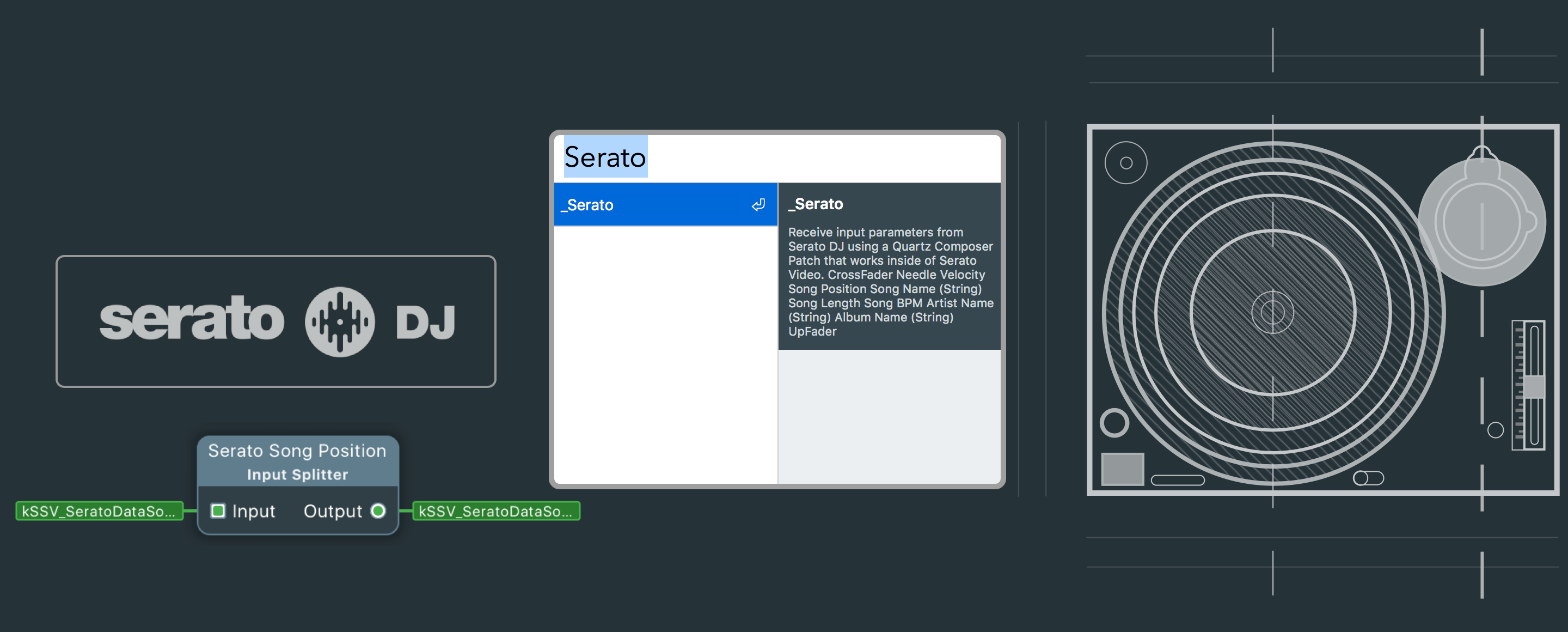
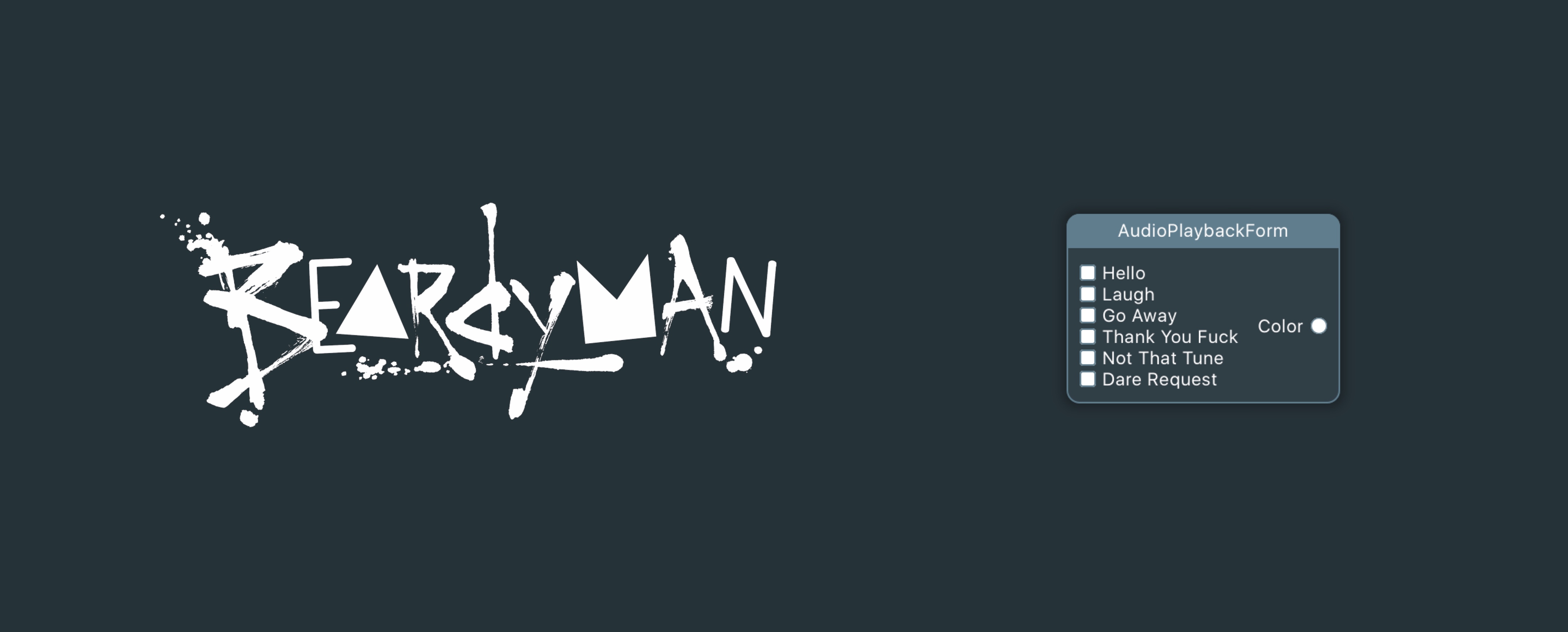
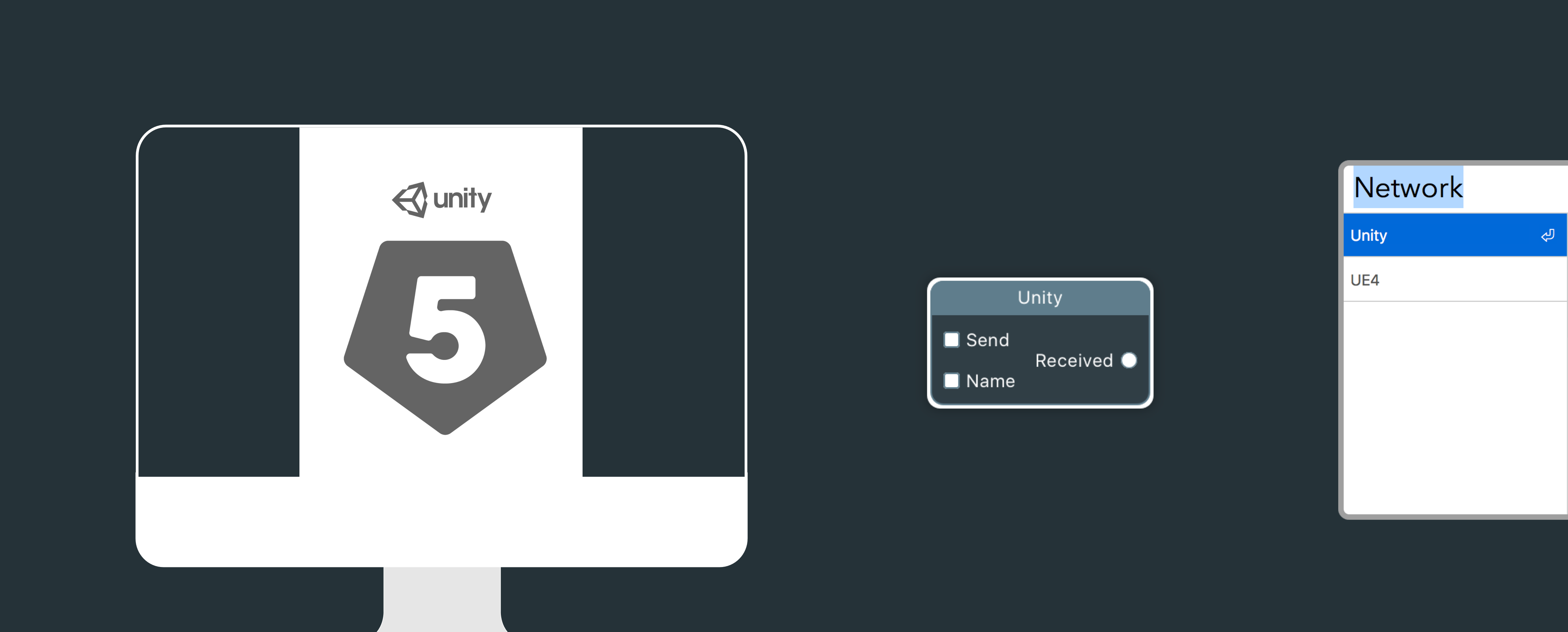
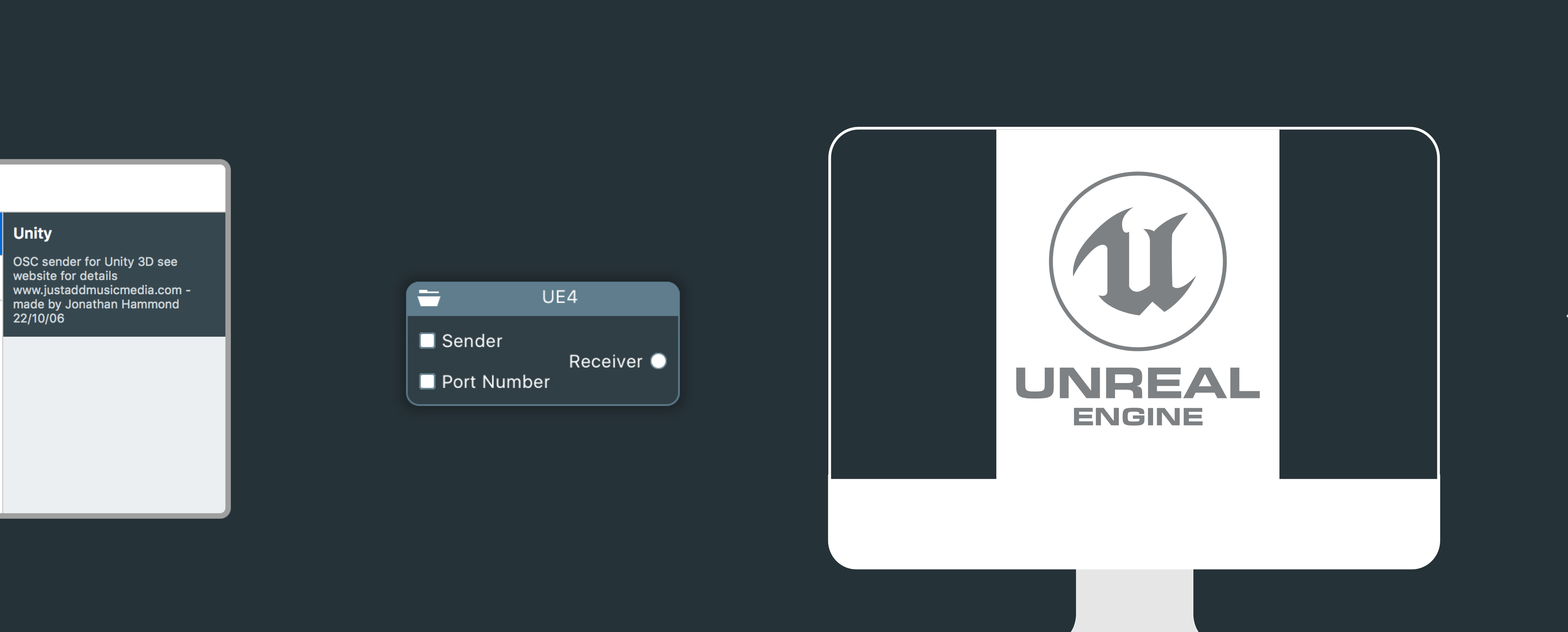
Device, UI kit, filters, gamepad, Myo, Sphero, Hue, Ableton, Serato, sampled audio, Unity and Unreal, each as a patch.
Talking to Unity and Unreal
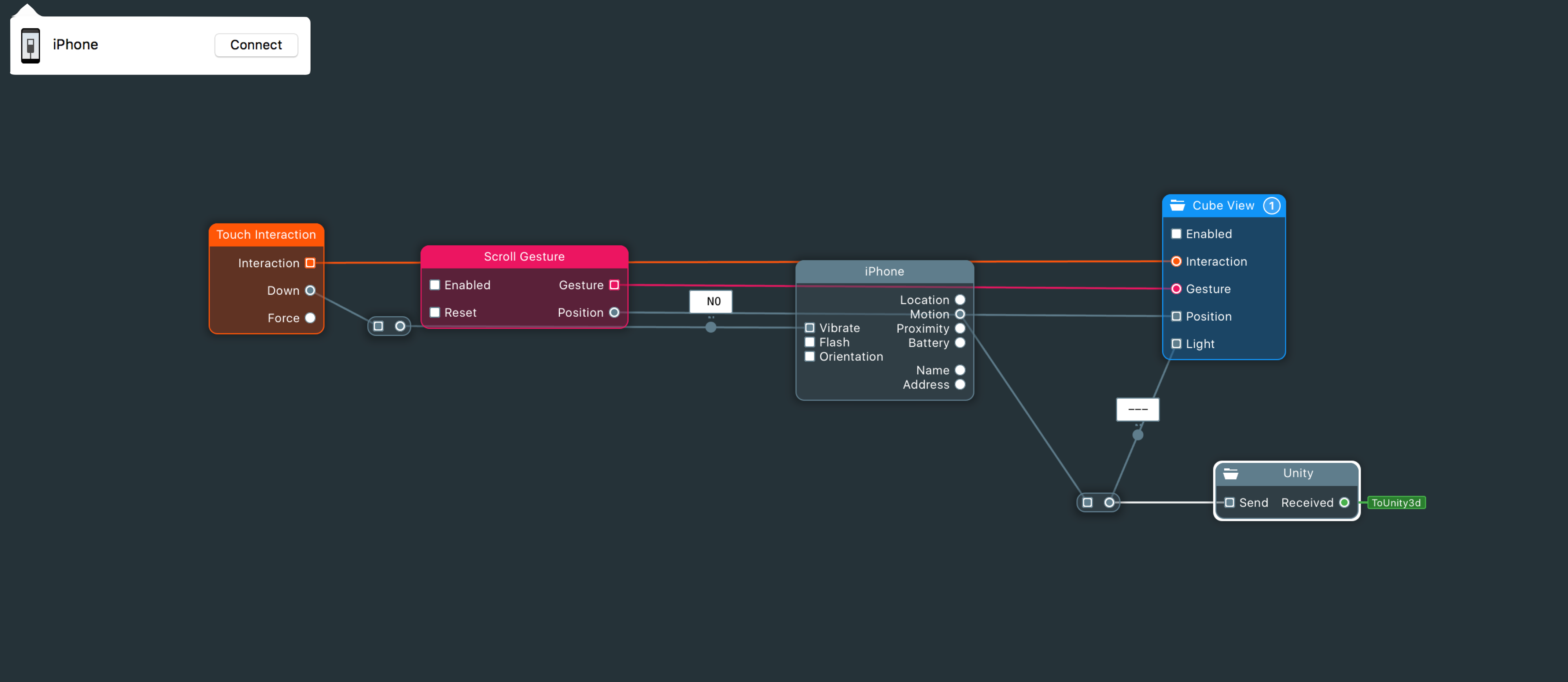
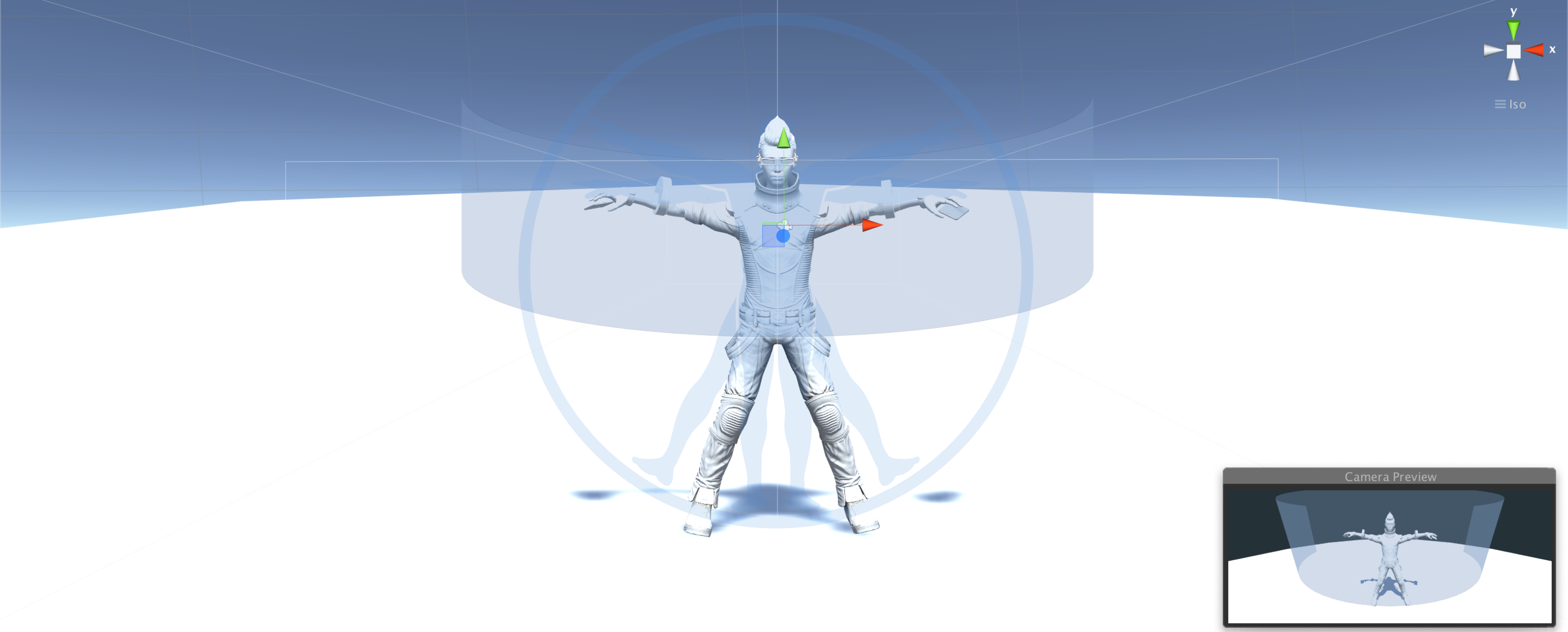
The Unity and UE4 patches let a live mobile prototype send and receive state from a running game engine over the network. A phone's motion, touch and location could drive a scene; the scene could drive the phone's UI back. For games studios it meant testing a companion UI against the actual game, not a mockup of it.
Filters and shaders
The Filters Pack bundled sixteen image and camera effects behind one patch, and a set of GLSL shader patches ran generative visuals on the phone's GPU, driven by the same signals as everything else in the graph.
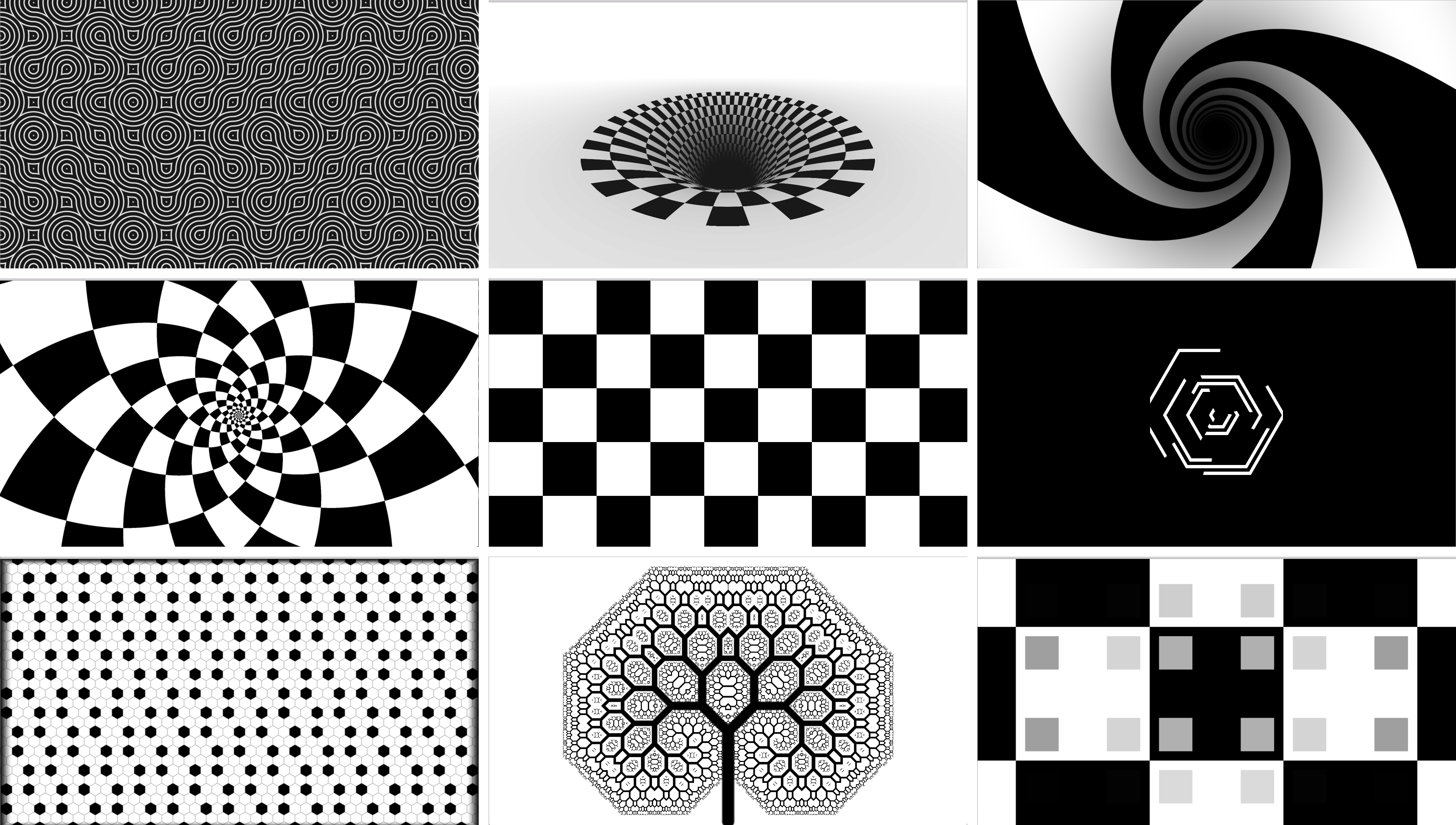
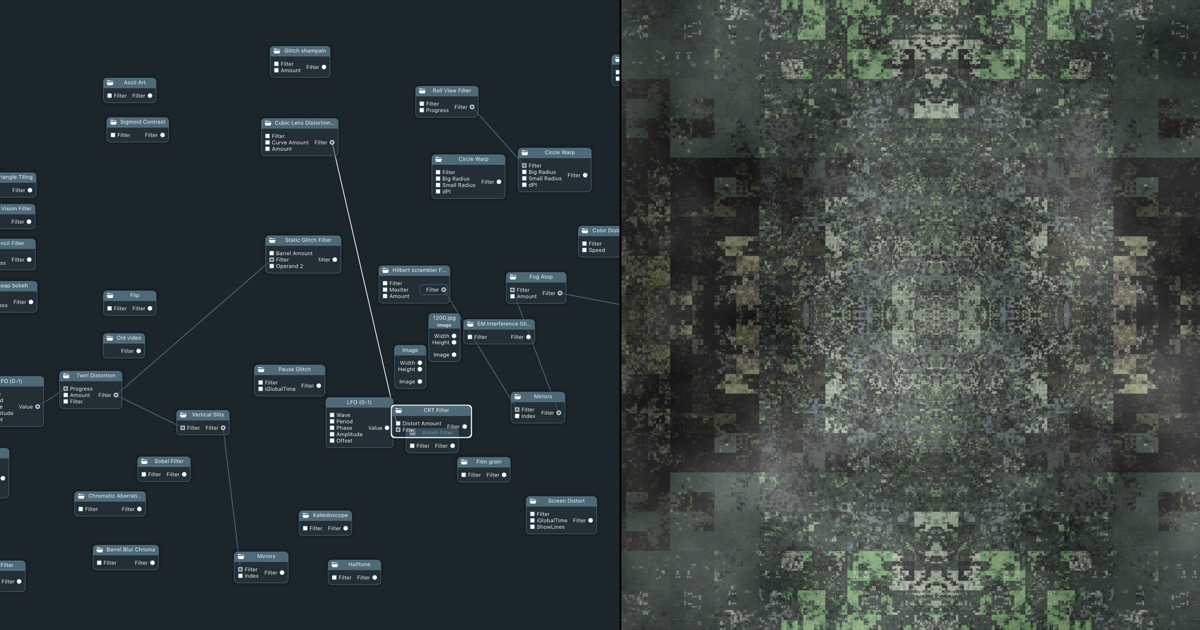
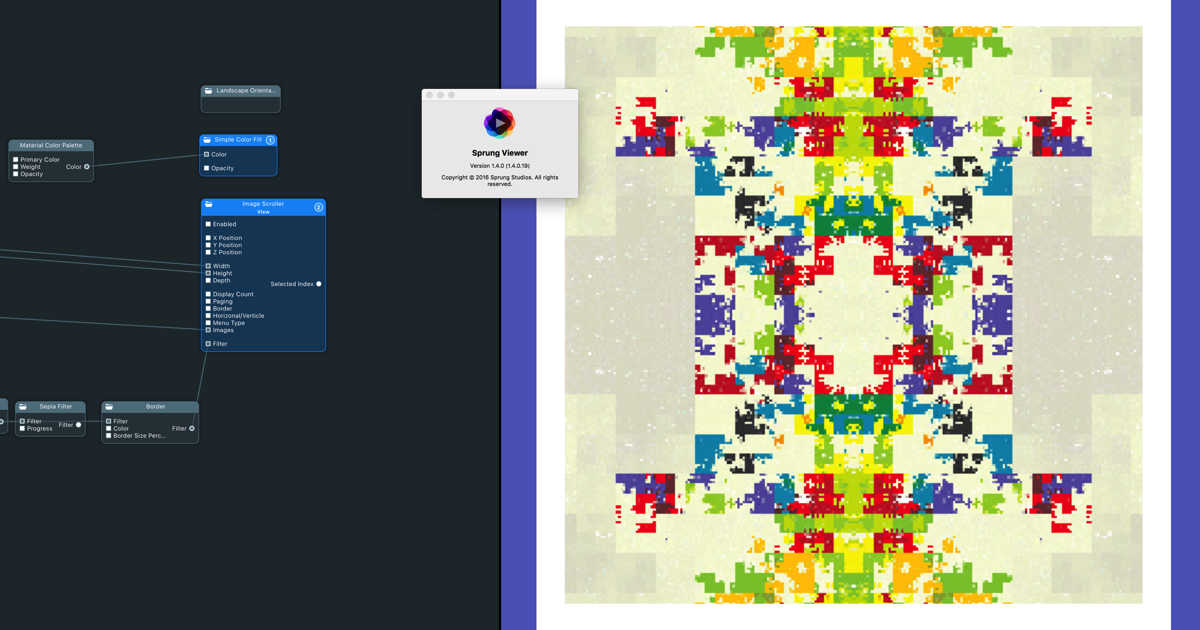
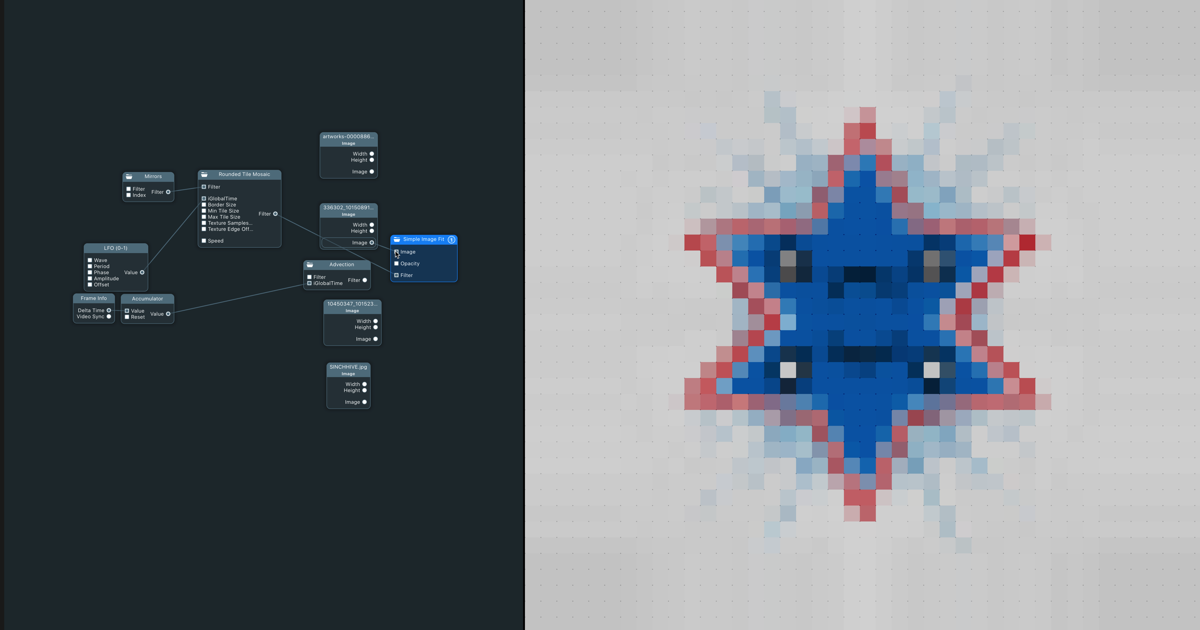
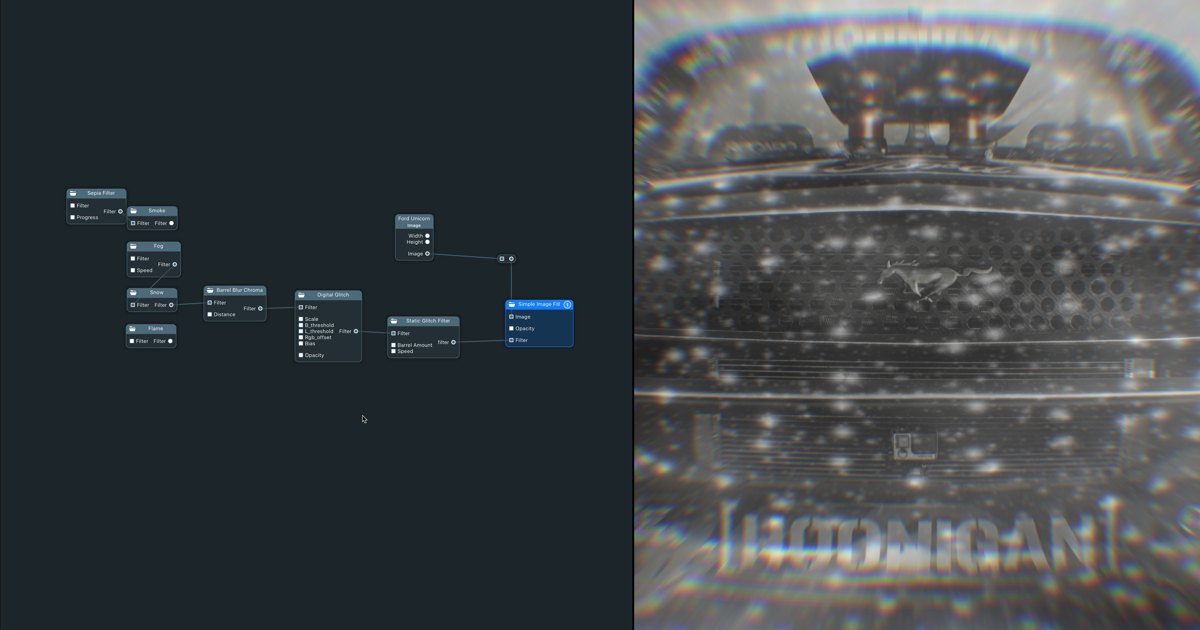
Shader patches and what they rendered.
Container apps in the field
Prototypes shipped as branded container apps for client pitches and demos, each one a real install on the client's phone.
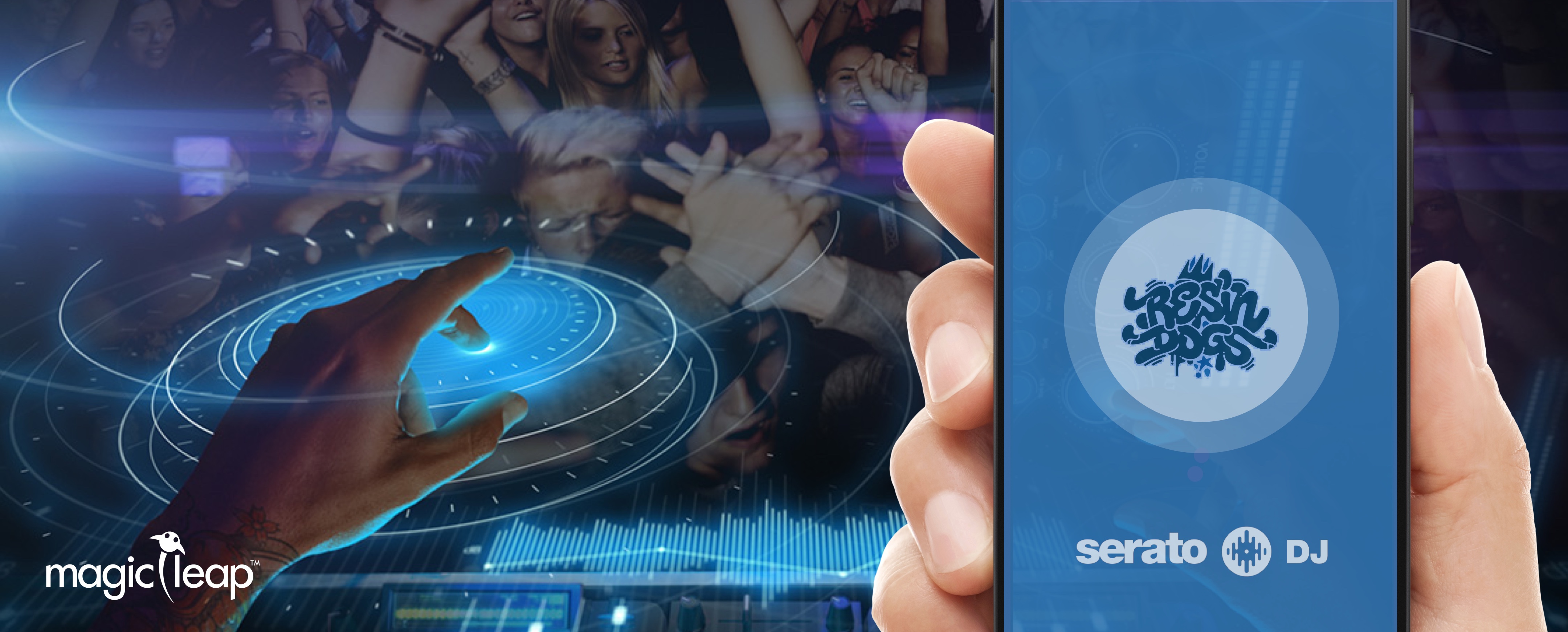
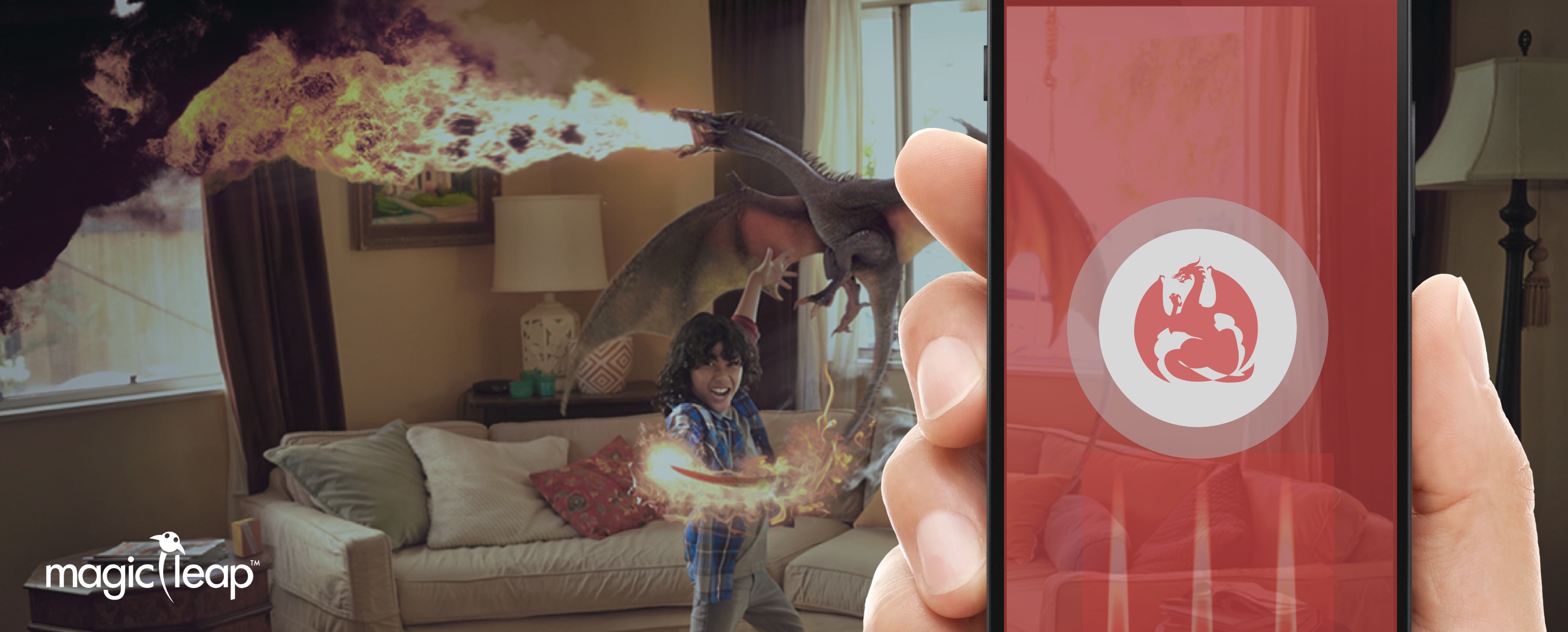
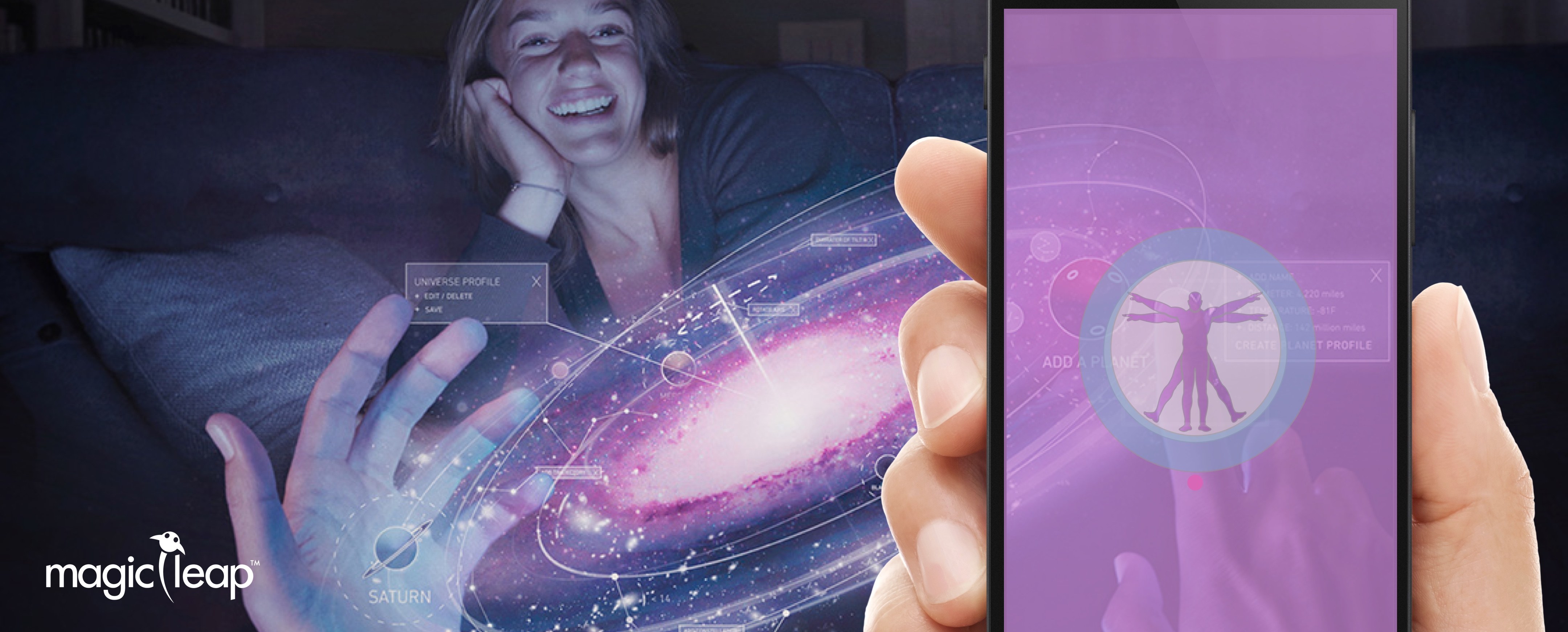
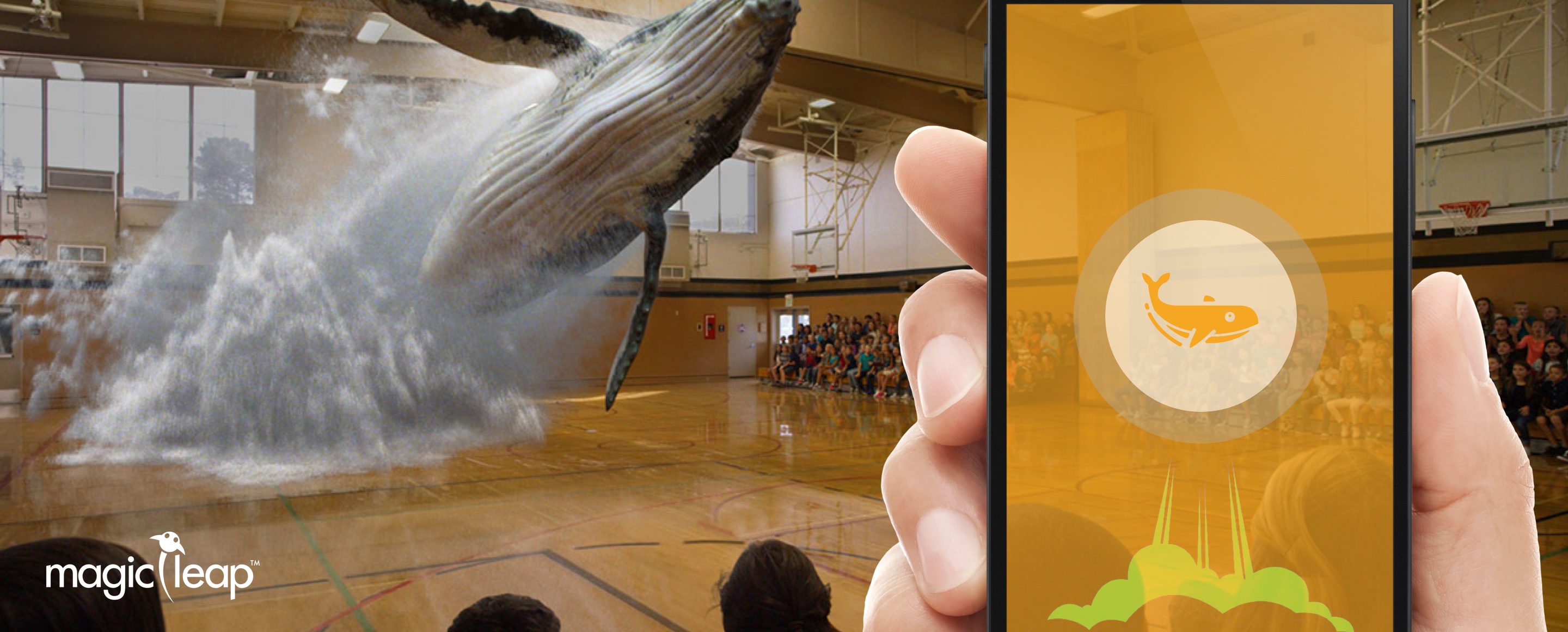
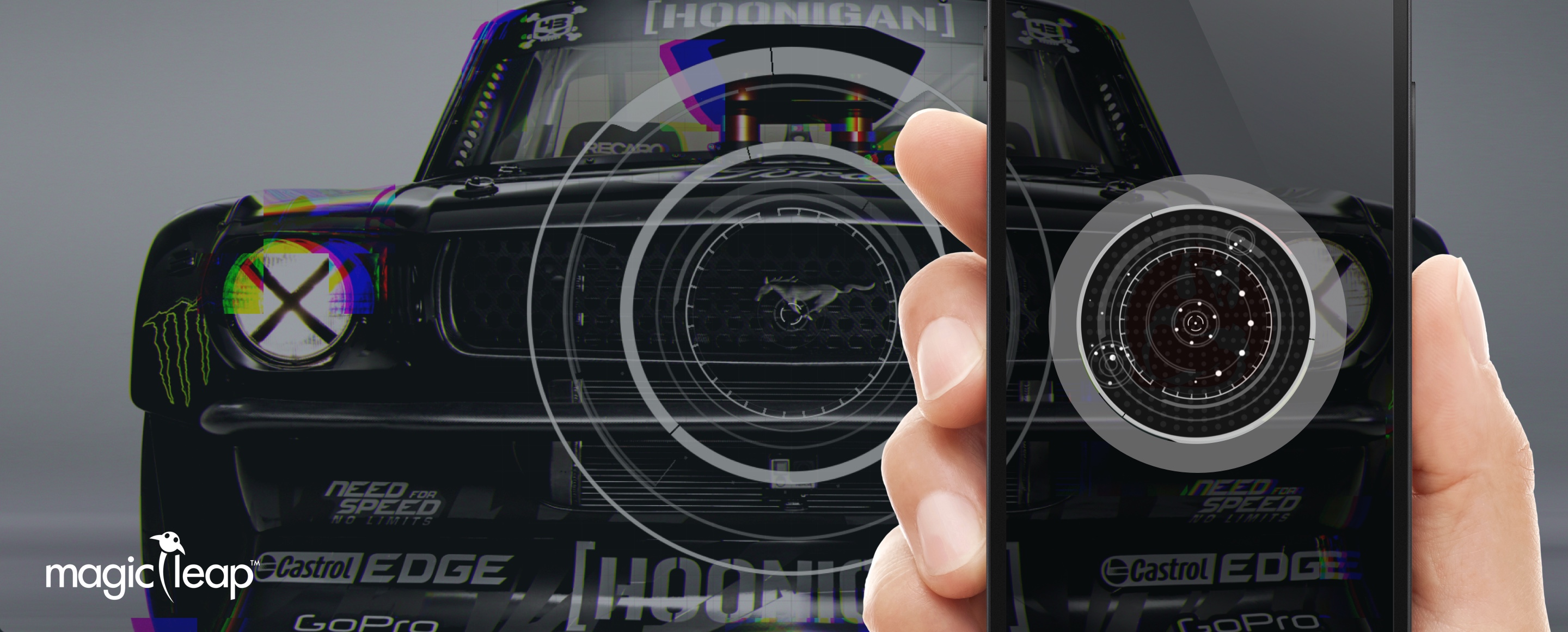
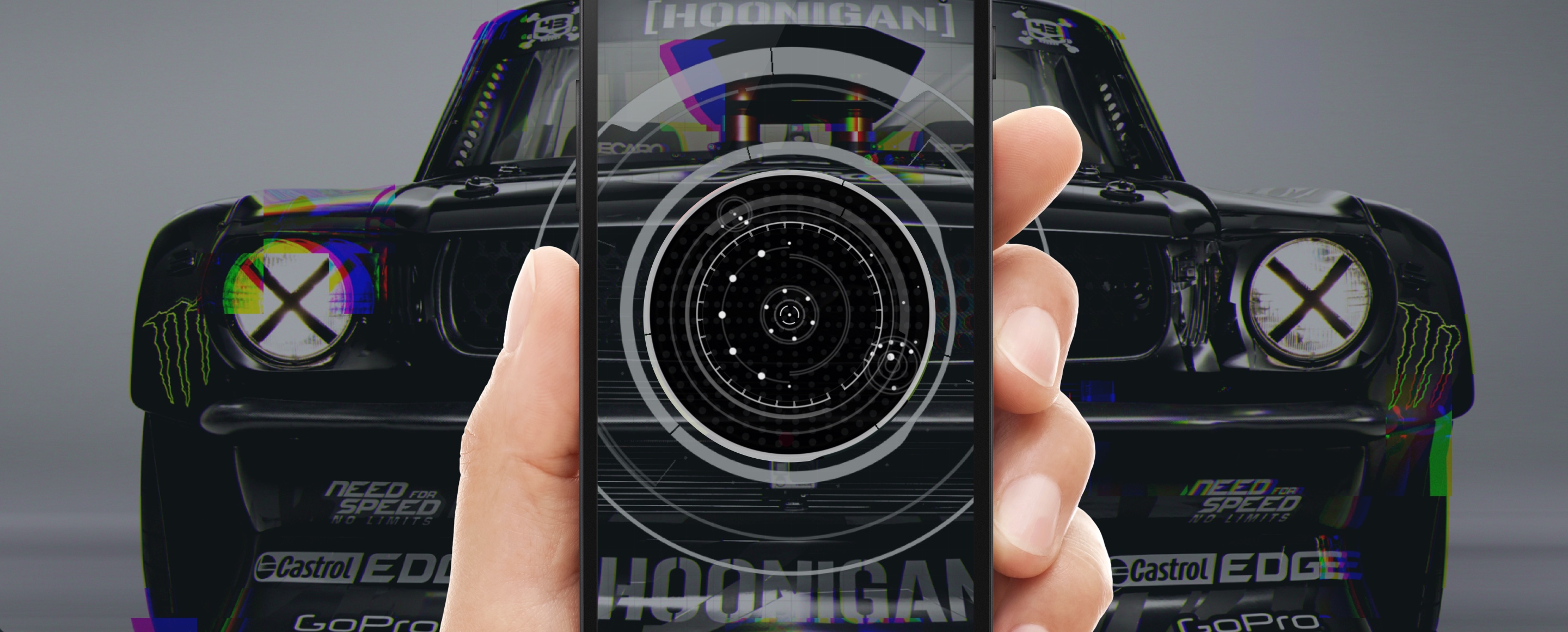
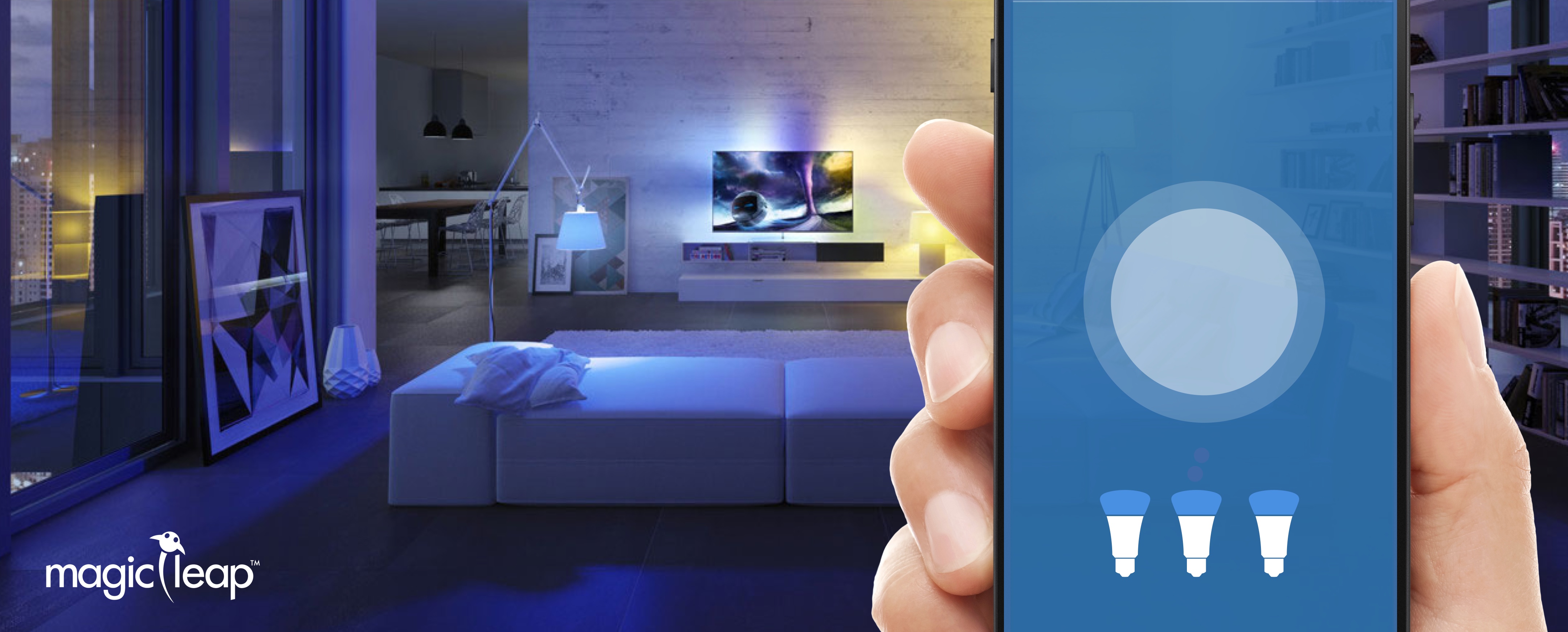
Concept container apps for Magic Leap, Hoonigan and Philips Hue.
In motion
Recorded walkthroughs of Form Enhanced driving live interfaces and gestures.